
The object library · 22 / 35
Depression Glass
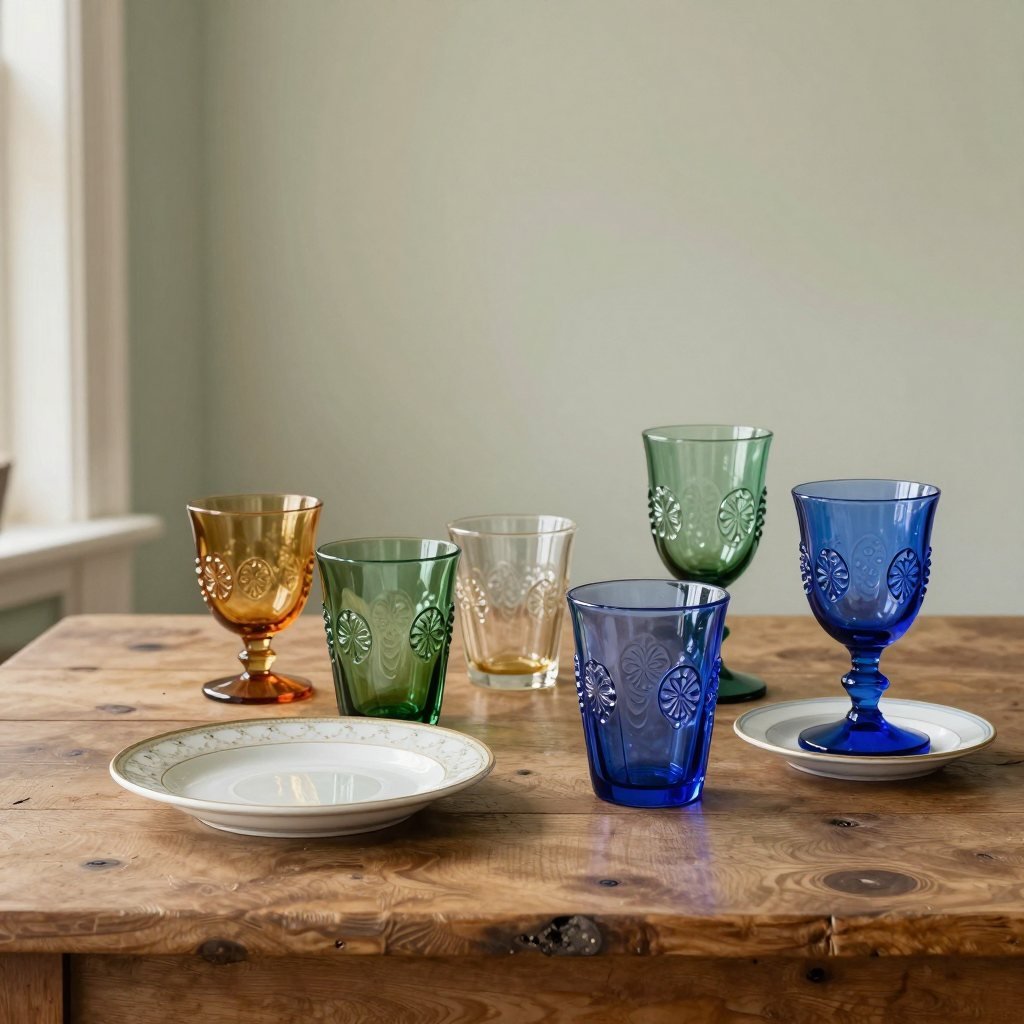
Depression glass is the umbrella term for the inexpensive, machine-pressed glassware that American factories produced from the 1920s through the 1940s and distributed at very low cost — as premiums in flour and detergent, at cinemas, and by the piece at grocery stores. Makers included Hocking, Jeannette, Federal, Indiana, MacBeth-Evans and Hazel-Atlas, and the same patterns ran in several colours: pink, green, amber, cobalt and clear. Collectors usually begin with one colour or one pattern. These guides keep pattern identification, condition and value as separate questions, and treat asking prices as claims.
Begin with the details
What to look for.
Expect seams, bubbles and mould marks
Machine pressing left visible seams, small bubbles and mould texture that are part of the original making, not damage. Learn what is ordinary before judging condition: a rough seam is not a crack, and a bubble is not a flaw to deduct. Record genuine damage — chips, stress lines, repairs — separately from manufacturing traces.
Follow one colour or one pattern
The field is wide, and most collectors build depth in a single colour such as pink or green, or in a single pattern. Pattern references document the shapes made and the production years, which anchors every value question. Our pink depression glass family covers that colour’s specifics.
Watch for reissues and later glass
Patterns were reissued, and lookalike glass was made later both in America and abroad. Seam sharpness, glass colour and documented shape lists separate them. Where a piece’s history is unclear, keep the uncertainty in the record rather than upgrading a guess to a date.
Questions collectors ask
Before you go further.
What is depression glass?
American machine-pressed glassware made mainly from the 1920s to the 1940s and distributed at very low cost during the Depression, as premiums and everyday merchandise. Pink, green, amber, cobalt and clear are the familiar colours. The name is a collector’s term covering many factories.
Is depression glass worth anything?
Pieces commonly trade between 10 and 40 dollars, with scarce patterns and shapes far higher. Condition and completeness move price quickly, and the market includes later reissues. Compare completed sales for the specific pattern and colour before paying.
How can you tell real depression glass?
Seams, small bubbles and mould texture are original to pressed glass and expected. The decisive checks are the pattern reference — shapes and production years — and comparison of glass colour and mould detail with documented pieces. A UV glow is not a test here: depression glass generally does not glow.
Which makers should I know?
Hocking (later Anchor Hocking), Jeannette, Federal, Indiana, MacBeth-Evans and Hazel-Atlas produced much of it; each has documented marks and pattern lists. A maker’s mark identifies a factory, not a date. Pattern references cover attribution when pieces are unmarked.
Keep exploring